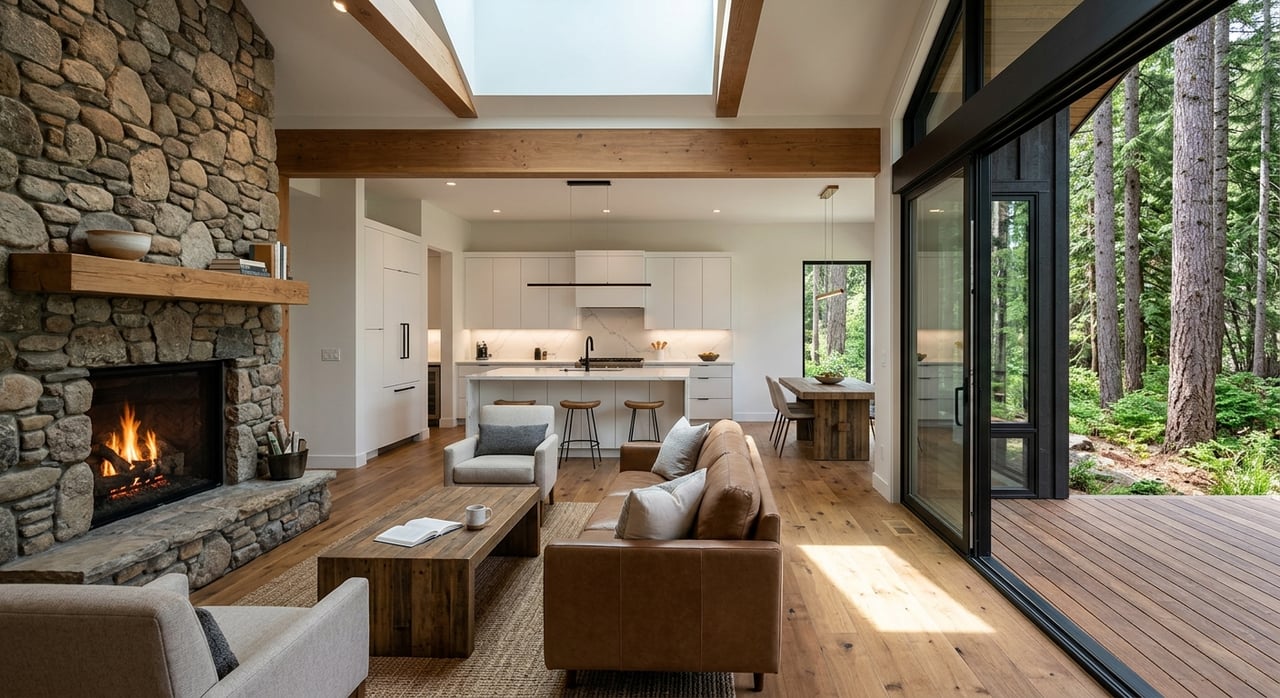
Meyers As Your Relaxed South Shore Home Base
May 28, 2026
May 28, 2026
Looking for a South Shore area that feels connected without feeling crowded? Meyers stands out for exactly that reason. If you want a mountain home base with daily conveniences, easy road access, and a setting shaped by open space and recreation, this community deserves a closer look. Let’s dive in.
Meyers is often framed as a practical South Shore base, and the local planning record helps explain why. El Dorado County describes it as a spacious, walkable mountain community, while the Tahoe Regional Planning Agency identifies it as the Basin’s primary gateway and the county side’s commercial and public-service hub. In simple terms, you get access to essentials without the feel of the most intensely commercial lakefront areas.
That balance is a big part of the appeal. Planning documents note that Meyers is separated from heavier commercialization, yet it still supports local retail, restaurants, a grocery store, trailheads, and public agency offices. For many buyers, that creates a sweet spot between convenience and a quieter mountain setting.
Meyers does not feel fully built out, and the land mix helps explain that. The area plan boundary covers about 669 acres, including roughly 118 acres of mixed-use land, 137 acres of recreation, 348 acres of conservation, and 66 acres of public right-of-way. Land ownership is also weighted toward public holdings, with about 68% public and 32% private.
That pattern matters when you picture daily life. Instead of a fully suburban feel, Meyers tends to read as a compact built area surrounded by open land. County materials also describe the community as historic and outdoor-oriented, with year-round recreation as a defining part of its identity.
If you want a base that makes it easier to move around South Shore, Meyers has a clear advantage. The community sits at the junction of US 50 and SR 89, which county and TRPA materials describe as the key connection between Meyers and South Lake Tahoe. That location supports both local errands and broader Basin access.
For many homeowners, this means you can stay plugged into South Shore activity while living in a setting that feels a little more removed. It is one reason Meyers works well for both full-time residents and second-home owners who value a practical home base.
Meyers is not just about car access. The Pat Lowe Memorial Bike Trail runs along US 50, and planning documents state that it provides a full connection between the US 50 and SR 89 area and South Lake Tahoe. The broader planning framework also supports added trails, bike lanes, and shared-use paths linking neighborhoods, shopping areas, recreation spots, and other community destinations.
If you like the idea of getting around in more than one way, that trail network matters. It supports a lifestyle where outdoor access is part of your weekly routine, not just a weekend plan.
One of Meyers’ strongest lifestyle features is the Upper Truckee River corridor. Tahoe Conservancy efforts in the area have focused on accessible trails, floodplain restoration, and public access along the river, which is Lake Tahoe’s largest tributary. That gives the community a natural asset that is both scenic and useful.
For buyers, this adds another layer to the “home base” idea. You are not only near roads and services, but also close to river access and outdoor space that can shape everyday life in a meaningful way.
Meyers is not limited to one home style. The Meyers Area Plan contemplates detached single-family homes and also recognizes apartments, condominiums, and townhomes as multi-family forms. Some Town Center parcels can include mixed-use and tourist-accommodation elements as well.
That range gives buyers more than one way to approach the market. Depending on the parcel and subarea, you may find options that suit a full-time residence, a lower-maintenance second home, or a property with more flexibility built into the setting.
Development standards in the applicable subareas show a baseline minimum lot size of 6,000 square feet and minimum frontage of 60 feet. Because the plan is divided into subareas, those figures should be treated as a starting point rather than a universal rule for every property. Parcel-specific review is still important.
County materials also note that river-adjacent portions of Meyers include private parcels with single-family homes, even though much of the surrounding sensitive land is public. That mix can appeal to buyers who want some breathing room and privacy without feeling totally isolated.
Meyers offers a relaxed feel, but ownership comes with real due diligence. The community is governed primarily by the Meyers Area Plan, county zoning, and TRPA rules. The area plan states that new development, additions, exterior modifications, and changes in use are reviewed for consistency with the Meyers Design Standards and Guidelines and require design review permits.
That layered review process is important to understand early. If county and TRPA rules conflict, the more stringent requirement applies. For buyers thinking ahead about remodeling, adding space, or changing how a property is used, these details can shape both timeline and budget.
You should not assume that HOA status or recorded restrictions are the same from one property to the next. In Meyers, those details should be verified parcel by parcel through recorded documents and local governing agencies. A neighborhood name alone does not tell you everything you need to know.
This matters whether you are buying a full-time home or a second home. Restrictions tied to a specific parcel can affect how you use the property, what changes are possible, and what future resale buyers may consider.
TRPA currently allows accessory dwelling units on California residential parcels, subject to coverage and development-right rules. Bonus-unit pathways may also apply near transit stops, town centers, or multi-family zones. That makes parcel-specific research especially important if flexibility is part of your long-term plan.
For some buyers, ADU potential can support guests, extended use, or future adaptability. The key is that this is not something to assume broadly. It needs to be evaluated based on the exact parcel and its development conditions.
Meyers tends to fit buyers who want a practical South Shore base rather than a purely resort-focused setting. You may appreciate it if your priority is daily livability, steady access to trails and recreation, and a location that connects easily to the rest of South Shore. It can also make sense if you value open space around the community, not just around your individual lot.
This area may be especially appealing if you want local services nearby but do not need to be in the most intensely commercial part of Tahoe. At the same time, the ownership side works best for buyers who are comfortable with parcel-level research and a more layered review process.
In a community like Meyers, the feel of the area is only part of the story. Parcel conditions, design review, TRPA requirements, and recorded restrictions can all affect what you can do with a property after closing. That is why local, detail-oriented guidance matters.
If you are comparing homes in Meyers with options elsewhere around South Shore, it helps to work with someone who understands both the lifestyle tradeoffs and the practical side of ownership. A strong buying strategy here is not just about finding the right house. It is about making sure the property supports how you actually want to use it.
If you want help evaluating Meyers against other South Shore neighborhoods, or you need a second set of eyes on parcel details before you move forward, Mackenzie Martin can help you navigate the process with practical local insight.
Stay up to date on the latest real estate trends.

Mackenzie Martin is dedicated to helping you find your dream home and assisting with any selling needs you may have. Contact her today for a free consultation for buying, selling, renting, or investing in California and Nevada.

MACKENZIE MARTIN | CA DRE# 01406664
ADDRESS 2845 LAKE TAHOE BLVD SOUTH LAKE TAHOE CA 96150